
LFF Industrial · New York City
Real Estate For Domestic Industry
LFF Industrial
Based in New York City, we are an integrated real estate investment firm that sits at the intersection of light and heavy industry. We primarily target flexible industrial assets that have proximity to strategic U.S. metro areas. Our secondary focus is on highly specialized industrial assets near key infrastructure. In addition to deep private equity experience, our partners have both private and institutional experience acquiring, managing, and developing commercial property.
Our investment philosophy is centered on value creation via detail-oriented acquisitions & development, creative and adaptive repositioning, and active management. Central to our mission is providing real estate solutions tailored to the needs of American industry, emphasizing our commitment to the growth and advancement of local and regional economies.
Investment Strategy
We target infill submarkets that contain localized pockets of self-sufficient economies that also serve the greater MSAs. Investments are strategically located near local consumers, businesses, and key infrastructure.
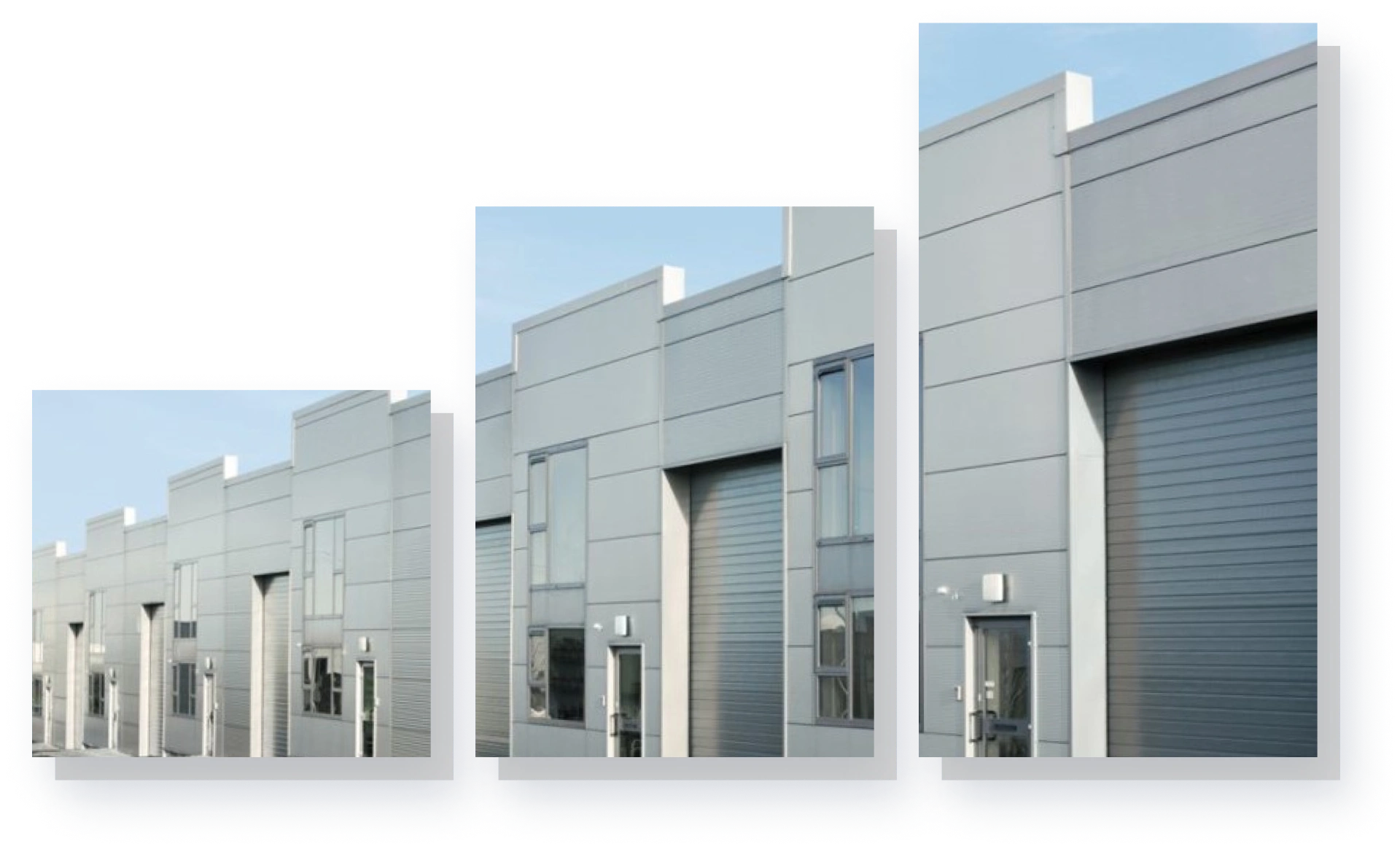
Our primary investment strategy focuses on core-plus and value-add acquisitions of existing industrial property, specifically catering to small business America and light industry. We target shallow and mid-bay industrial assets, promoting and encouraging domestic manufacturing, production, and distribution.
Our secondary investment strategy focuses on the opportunistic acquisition and development of industrial and industrial-adjacent assets. This includes flexible business parks, specialized industrial property, data centers, and infrastructure that meet the demands of heavy industry, advanced manufacturing, and high-performance compute.
Target Investment Criteria
Industrial
Property & Infrastructure
U.S. Metro
Infill Markets
$10M – $500M+
Total Capitalization
Flexible industrial properties serve a wide range of businesses that need proximity to labor, customers, infrastructure, and regional supply chains. Relative to traditional bulk distribution assets, these properties benefit from a more diversified tenant base, more frequent opportunities for hands-on value creation, and a supply profile that is difficult to replace in infill markets.
Diversified Users
- Broad tenant demand from local, regional, and national businesses across manufacturing, services, logistics, construction, repair, trade, food, healthcare, and technology-enabled operations
- Flexible building formats support a wide range of uses, reducing reliance on any single tenant type or industry
- Smaller suites and multi-tenant layouts create a deeper pool of prospective users and allow businesses to expand or contract over time
- Staggered lease expirations can produce a smoother income profile and more frequent mark-to-market opportunities
- Infill locations provide proximity to customers, labor, highways, ports, airports, and other critical infrastructure
- Asset functionality can evolve with tenant needs, supporting light manufacturing, service operations, distribution, showroom, office, storage, and outdoor use
Value-Add Opportunities
- Fragmented private ownership creates opportunities to acquire undermanaged or undercapitalized assets
- Operational improvements, active leasing, and professional property management can unlock value without relying solely on market rent growth
- Deferred maintenance and targeted capital improvements can materially improve tenant retention, rent levels, and asset durability
- Functional repositioning can improve unit mix, loading, circulation, yard areas, parking, power, and tenant usability
- Excess land, outdoor storage, trailer parking, signage, and ancillary site features can create additional income streams
- Select assets may support infrastructure upgrades, expansion, redevelopment, or higher-value industrial-adjacent uses over time
Attractive Supply & Demand
- Infill industrial land is increasingly scarce and often competes with residential, retail, and other higher-density commercial uses
- New industrial development remains concentrated in larger, single-tenant logistics facilities rather than smaller, flexible multi-tenant product
- Replacement economics are difficult for shallow-bay and medium-bay assets, limiting new supply in many target markets
- Demand is supported by reshoring, nearshoring, infrastructure investment, e-commerce, service businesses, and the broader re-industrialization of the U.S. economy
- Flexible industrial assets sit close to the end user, making them difficult to displace and expensive to replicate
- Modernizing legacy assets creates an opportunity to meet current tenant needs without depending on ground-up development